
Where we stand
The path to a million tonnes a year
Six rungs from a defined method to carbon removal at scale. Two are behind us, the third is under way, and every one ahead of it carries a date you can hold us to.
01
Done
Method defined
The counting rules, the H/C gate, the reconciliation and the round-down rule fixed and published in full, before any result exists to be flattered by them.
02
Done
Chain designed
Laboratory partners identified, the reactor class chosen, the dMRV architecture specified end to end, and the evidence chain mapped to the CRCF methodology now in force.
03 · we are here
Now
Facility 1 in development
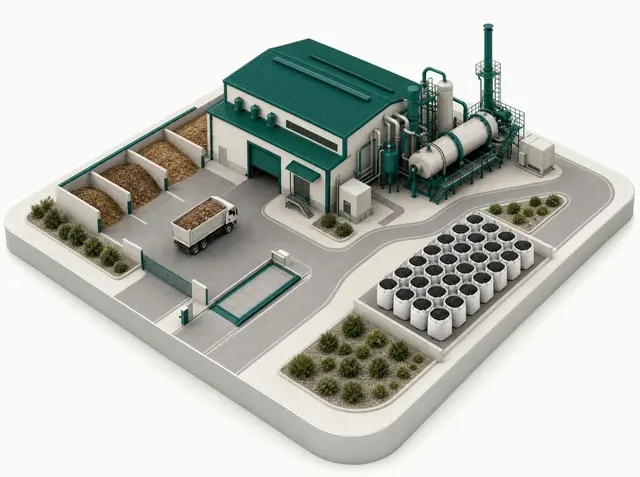
The first production site in development in Miranda do Corvo, Coimbra district. Siting and permitting are under way on the municipal protocol, and the feedstock yard and phase-1 unit are engineered to be instrumented from the first batch rather than retrofitted afterwards, because the evidence cannot be reconstructed later.
04
Target mid 2027
Commissioning · first batches
First material through the reactor. Sampling protocol exercised, laboratory turnaround proven, sensor and laboratory chains reconciled against each other for the first time on real batches.
05
Target late 2027
First certified tonne
A batch through the full chain: laboratory-verified, reconciled, lifecycle-deducted, audited and issued on a registry with a serial number you can look up. This is the rung that changes what this company is allowed to claim.
06
Toward 1 MtCO₂e/yr
Scale
Facility 2, then the Mozambique and Angola pipeline, and insetting units inside partner value chains. The measurement layer is the part that compounds: every project added runs on the same chain of proof.
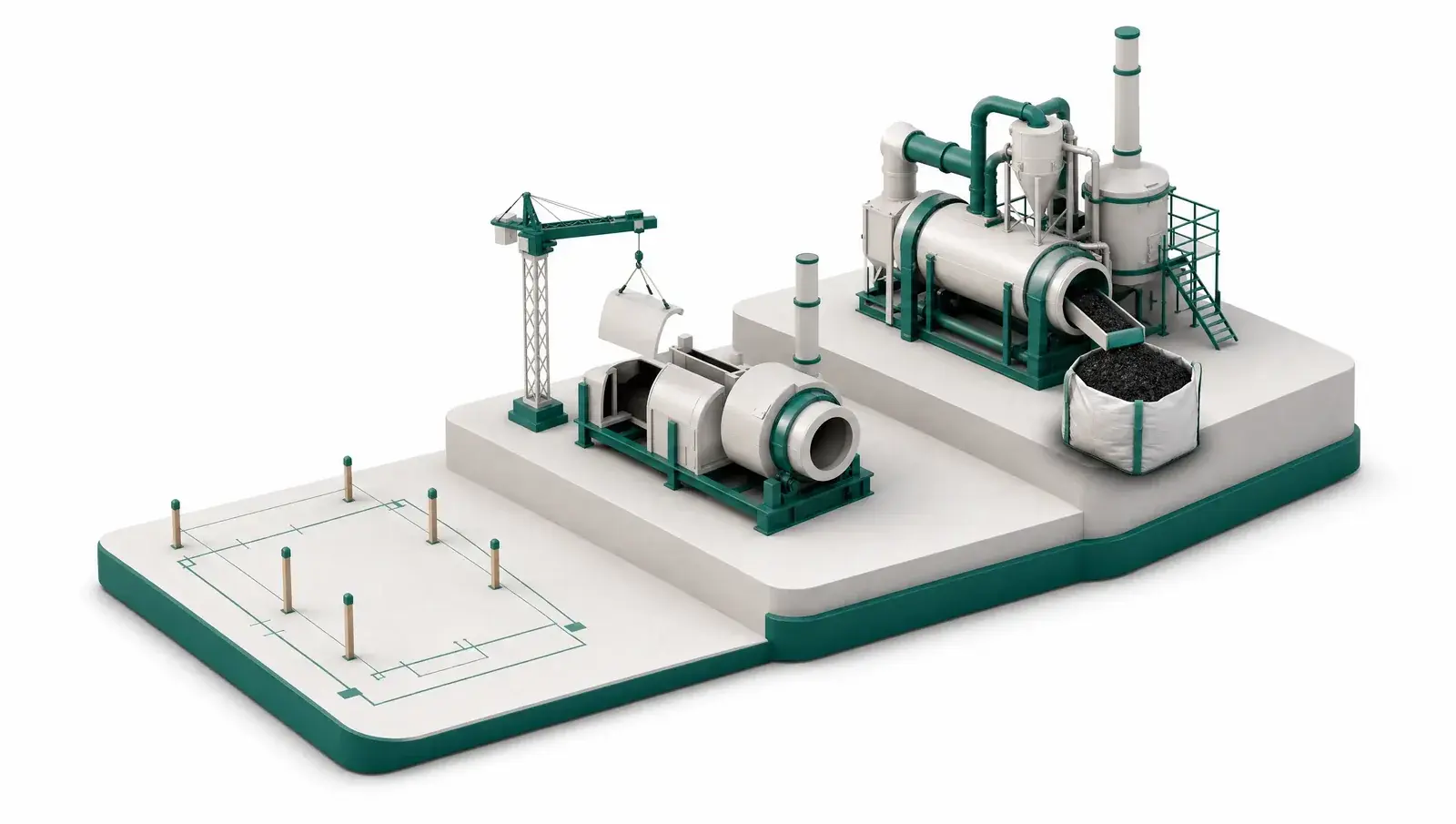
In development, in build, producing
The next rungs
What happens next, and when
Dated commitments, not aspirations. Each one is checkable on the day it lands, which is the point of publishing them in advance.
- In preparationRegistry engagement: a Puro.earth future-facility listing for Facility 1, ahead of production. No Portuguese project is on the registry today; we intend to be the first.
- Mid 2027Commissioning at Facility 1: first material through the reactor, sampling and laboratory chains proven on real batches.
- 2027First commercial production at Facility 1, Miranda do Corvo, Portugal.
- Late 2027First certified tonne: laboratory-verified, audited, registry-serialised.
- As schemes are recognisedCRCF certification. The methodology entered into force in May 2026; no operator holds a certificate yet, because the Commission's scheme-recognition process is still running.
- From first issuanceA public ledger: every tonne, its batch, its laboratory result, its serial.
Why unit N is cheaper than unit one
The first facility is the expensive one. The design envelope, the permitting playbook, the measurement chain and the supplier model all carry to the next site. That carry-over is the whole arithmetic of a million tonnes.
Each deployment reuses a standard unit envelope and a site playbook proven at Facility 1; what changes per site is feedstock logistics and permitting detail, not the machine or the evidence chain.
The pipeline behind rung six
1 MtCO₂e a year, within ten years
Offsetting
We develop our own biochar production facilities. We measure and document the CO₂ removals, which are verified by independent bodies before the certification programme issues the credits. Companies can buy these credits to support climate action beyond their own value chain.
Insetting
Units sited inside a partner's operation, converting their own residue. The removal lands in their value chain: their scope 3, not an open-market credit.
Capacities are feedstock throughput, not CO₂ removed. Facility 1 is designed for an estimated 18,000–26,000 tCO₂e/yr of certified removals at full operation (a design estimate, replaced by measured data as the site runs).