recarbono

Carbon dioxide removal

Taking carbon back out

Cutting emissions is necessary and not sufficient. Meeting climate targets also means removing CO₂ that is already in the atmosphere, and keeping it out. Here is how that is done, how the methods differ, and how a removal becomes a credit you can defend.

Why removal exists

Emissions cuts alone cannot close the gap

Some emissions are extremely hard to eliminate: cement chemistry, long-haul aviation, parts of heavy industry and agriculture. Even on an aggressive decarbonisation path, a residual remains. And the carbon already released is not withdrawn by cutting future emissions; it stays in the atmosphere, warming, for centuries.

Carbon dioxide removal addresses both. It is the counterweight to residual emissions, and the only mechanism that reduces the existing stock of atmospheric CO₂. This is the distinction that matters and that the market still blurs: an avoidance offset prevents a future emission; a removal takes carbon out of the air. Only one of them can be a net negative.

The methods, compared

Seven ways to remove a tonne

They are not interchangeable. Durability, cost and how provable the tonne is vary by an order of magnitude, and those three axes are what a serious buyer trades off.

MethodHow it stores carbonDurabilityMarket price / tonneVerifiabilityScale today
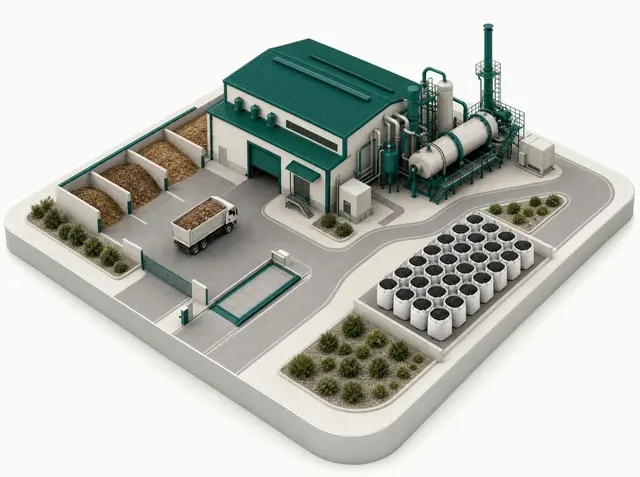
Biochar carbon removalBiomass residue is pyrolysed; carbon is locked in a stable aromatic form and stored in soil or materials.Several centuries (CORC200+)€100–200High (physical, measurable per batch)Deployable today
Direct air capture (DACCS)CO₂ is chemically filtered from ambient air and injected into geological storage.1,000+ years€400–1,000+High (metered at injection)Early, energy-hungry
BECCSBiomass is burned for energy and the resulting CO₂ is captured and stored geologically.1,000+ years€100–300High (metered at capture)Limited by biomass supply
Afforestation & reforestationTrees are planted or forests restored; carbon is stored in living biomass and soil.Decades (reversible)€5–50Moderate (modelled, remote-sensed)Large, land-constrained
Soil carbon sequestrationFarming practices increase organic carbon held in agricultural soils.Years to decades (reversible)€10–50Low to moderate (high sampling variance)Very large, hard to prove
Enhanced rock weatheringCrushed silicate rock is spread on land; weathering converts CO₂ mostly into dissolved bicarbonate carried to the ocean, and to a lesser extent into solid carbonate.10,000+ years€100–300Developing (indirect measurement)Early
Blue carbonCoastal ecosystems (mangroves, seagrass meadows, salt marshes) are restored or protected; carbon is stored in biomass and waterlogged sediments.Decades to centuries (reversible)€15–80Low to moderate (modelled, site-variable)Meaningful, coastline-constrained

Prices are market reference ranges, not Recarbono's price: indicative figures drawn from public market data and registry methodologies, not quotes. They vary widely by project, volume and delivery date. Durability is likewise indicative, and verifiability reflects how directly the stored carbon can be physically measured.

Compare two

Tap any two methods to set them side by side.

Biochar carbon removal

Biomass residue is pyrolysed; carbon is locked in a stable aromatic form and stored in soil or materials.

Durability
Several centuries (CORC200+)
Market price / tonne
€100–200
Verifiability
High (physical, measurable per batch)
Scale today
Deployable today

Direct air capture (DACCS)

CO₂ is chemically filtered from ambient air and injected into geological storage.

Durability
1,000+ years
Market price / tonne
€400–1,000+
Verifiability
High (metered at injection)
Scale today
Early, energy-hungry

As described in the comparison table above: indicative ranges, not quotes.

Where biochar wins

Durable, physical, and available now

  • You can hold the carbon in your hand. Storage is a physical material that can be weighed, sampled and analysed, not a model of what a forest might do.
  • Centuries of durability, today. No geological storage infrastructure required, and no waiting for a technology to mature.
  • It solves a second problem. The feedstock is fire-risk residue, and the product improves the soil it returns to.

Where biochar is not the answer

The honest limits

  • Biomass is finite. Biochar scales with genuinely surplus residue. It cannot absorb global emissions, and any supplier whose growth depends on new harvesting has stopped doing removal.
  • Centuries, not geological time. For storage measured in tens of thousands of years, mineralisation and geological injection are the stronger claim.
  • Quality varies enormously. “Biochar” covers material made well and material made badly. Without batch-level analysis, the word alone guarantees nothing.

A serious removal portfolio uses several methods. We would rather tell you where ours fits than pretend it is the whole answer.

How a tonne becomes a credit

Measurement, certification, issuance, retirement

01

Measure

The removal is quantified from physical measurements (batch mass, carbon fraction, permanence), net of lifecycle emissions.

02

Certify

An accredited third party audits the evidence against a published methodology (EBC, C-Sink, Puro.earth; in the EU, the CRCF).

03

Issue

The registry issues serialised units, one per certified tonne, recorded so the same tonne cannot be sold twice.

04

Retire

The buyer retires the unit against their claim. Retirement is permanent and public: the tonne is spent.

Most of the voluntary market's credibility problems live in step one. If the measurement is modelled rather than physical, everything downstream inherits that uncertainty, which is why we built our own measurement stack, and why we publish exactly how we count a tonne.

FAQ

Questions people ask

Definitions for every term are in the glossary.

Removal you can put on the record

Durable, physically measured, and traceable to the batch it came from.